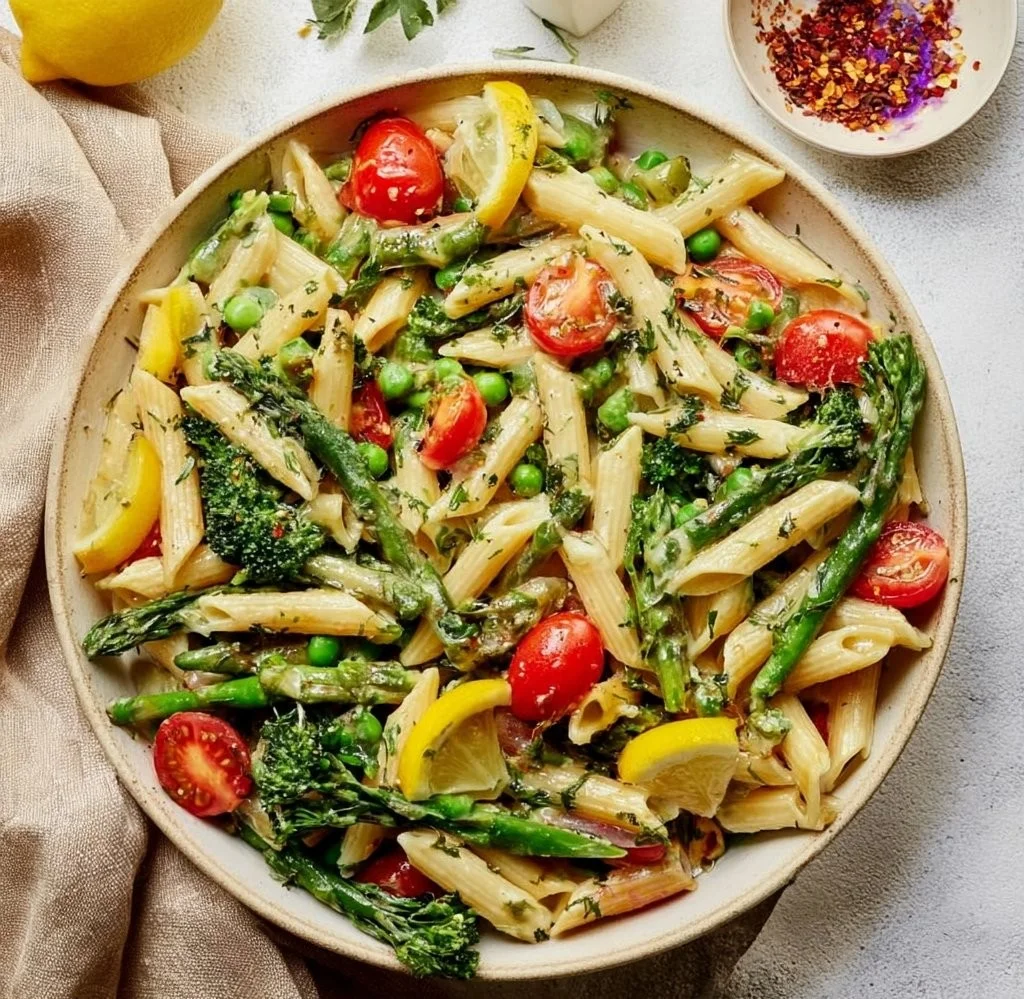
Pasta Primavera Recipe
I still remember the first spring evening I made this Pasta Primavera Recipe — the house smelled like lemon and garlic, and I kept sneaking bites while I stirred. Ever found yourself staring at a fridge full of good intentions and worried you’ll overcook everything? I’ve been there; beginners often fear mushy veggies or a bland sauce. Trust me: this version is forgiving, quick, and designed to make weeknight cooking feel calm and cozy. If you enjoy fuss-free pasta dinners, you might also like my twist on a creamy favorite, the Marry Me Chicken Pasta for another comforting option.
A Quick Look at This Pasta Primavera Recipe
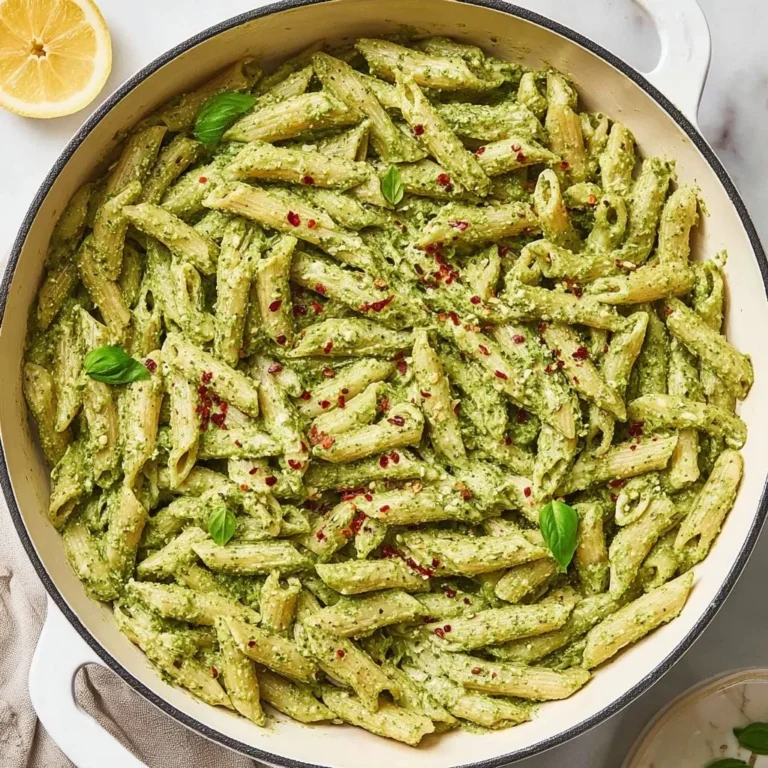
This Pasta Primavera Recipe is bright, lemony penne tossed with crisp spring vegetables — asparagus and broccoli are the stars. It’s creamy without being heavy thanks to a simple lemon cream sauce, and the addition of grape tomatoes and fresh basil keeps each bite lively. Nutritionally it’s a great way to pack veggies into dinner, and it comes together quickly, which is perfect for busy home cooks or beginners. Keep reading to learn the little tricks that keep the veggies tender-crisp and the sauce silky — you’ll be surprised how easy it is.
Ingredients You’ll Need for Pasta Primavera Recipe
Essentials
- 16 oz penne pasta — holds sauce well and gives a cozy mouthfeel.
- 1 tablespoon olive oil — for sautéing the vegetables.
- 8 oz asparagus, trimmed and cut into 1½-inch pieces — one of the main fresh flavors.
- 1 yellow bell pepper, cut into 1½-inch pieces — adds color and sweetness.
- 2 cups small broccoli florets — cooks quickly and adds texture.
- 1 small zucchini, chopped — mild and takes on flavors nicely.
- Salt and black pepper to taste — simple seasoning is key.
- 2 tablespoons unsalted butter — builds the sauce base and adds silkiness.
- 1 shallot, minced — gentler than onion and perfect for this sauce.
- 4 garlic cloves, minced — for savory depth.
- Zest of 1 lemon — bright citrus aroma.
- Dash crushed red pepper flakes — optional heat to balance cream.
- 1 cup vegetable broth — deglazes the pan and gives body to the sauce.
- 1/2 cup heavy cream — creates a rich, cozy sauce (can be lightened — see substitutions).
- 3 tablespoons lemon juice, divided — fresh lemon lifts the whole dish.
- 1 cup frozen peas — sweetness and easy convenience.
- 1/2 cup shredded Parmesan cheese — salty, nutty finish.
- 1½ cups halved grape tomatoes — add pop and freshness.
- 1/4 cup chopped basil — aromatic finish.
- 2 tablespoons Italian parsley, for garnish — fresh green flourish.
- Extra Parmesan cheese and crushed red pepper flakes, for garnish — optional extras for serving.
Optional add-ons
- Grilled chicken or roasted tofu — if you want extra protein.
- Toasted pine nuts or slivered almonds — for crunch.
- A handful of baby spinach stirred in at the end — wilts quickly and adds nutrients.
- Lemon slices for garnish — pretty and extra zingy.
Substitutions and shortcuts
- Pasta: Use farfalle, rigatoni, or penne-sized shapes you have on hand. Small tubes or bow ties work well.
- Heavy cream: Swap for half-and-half plus a tablespoon of cornstarch (to thicken) or use whole milk for a lighter version — sauce will be less rich.
- Vegetable broth: Chicken broth works if you’re not vegetarian.
- Parmesan: Pecorino Romano offers a sharper flavor if you like tang.
- Frozen peas: Use fresh if in season; add them a touch earlier so they cook through.
- Shallot: Use a small onion if needed — cook slightly longer to soften.
- Shortcuts: Use pre-chopped vegetables or a frozen vegetable medley to cut prep time. Roasted vegetables from a sheet pan can also be folded in for a different texture.
If you’d like more make-ahead ideas or a summer salad twist for leftovers, check my cold pasta inspiration like the Bloody Mary Shrimp Pasta Salad.
How to Make Pasta Primavera Recipe Step-by-Step
I’ll walk you through this in a way that keeps things calm and clear — no rushed steps, no mystery timing. Have a pot of salted water on the stove and all vegetables prepped before you start. That makes the whole process peaceful.
Prepare the pasta
- Fill a large pot with water and bring it to a rolling boil. Salt the water well — it should taste like the sea. This is your only chance to season the pasta itself.
- Add 16 oz penne and cook according to package directions, about 11 minutes for al dente (timing varies by brand). Stir occasionally so the pasta doesn’t stick.
- Taste a piece at the minimum time to check for doneness: it should be tender with a tiny bite. Drain well in a colander and return the pasta to the pot. Toss lightly to prevent sticking.
Sauté the vegetables
- While the pasta cooks, heat 1 tablespoon olive oil in a large skillet over medium-high heat. Let the oil get hot but not smoking — you want a good sizzle when vegetables hit the pan.
- Add the asparagus, yellow bell pepper, and broccoli florets. Sauté for 2–3 minutes, stirring occasionally. The goal is to cook the outside while keeping them crisp.
- Add the chopped zucchini and continue cooking for another 1–2 minutes until the vegetables are tender but still bright and firm. Season with salt and black pepper to taste.
- Transfer the cooked vegetables to a large plate or bowl to stop cooking. This keeps them from going mushy while you make the sauce.
Make the lemon cream sauce
- Reduce the skillet to medium heat and melt 2 tablespoons of unsalted butter. Once the butter bubbles, add the minced shallot and garlic. Sauté for about 2 minutes until fragrant and softened, taking care not to brown the garlic (it can taste bitter if overcooked).
- Stir in the lemon zest and a dash of crushed red pepper flakes — just a small amount unless you like heat. Pour in 1 cup vegetable broth and bring to a simmer. Let the broth reduce by about half, which takes roughly 4–5 minutes. This concentrates flavor and prevents a watery sauce.
- Once reduced, stir in 1/2 cup heavy cream and 2 tablespoons of lemon juice. Simmer gently for 1–2 minutes to marry the flavors and warm the cream — don’t boil hard or the cream can separate.
Combine pasta, vegetables, and sauce
- Stir the frozen peas directly into the hot pasta pot (the residual heat will thaw them quickly). Add the cooked vegetables to the pasta pot as well.
- Pour the lemon cream sauce over the pasta and vegetables and stir until everything is evenly coated. The sauce should cling to the pasta, creating a silky coating rather than pooling in the bottom.
- Stir in 1/2 cup shredded Parmesan and the remaining 1 tablespoon of lemon juice. Taste and adjust seasoning with salt and black pepper as needed.
- Gently fold in 1½ cups halved grape tomatoes and 1/4 cup chopped basil at the end so the tomatoes stay fresh and the basil doesn’t wilt too much.
Finish and serve
- Transfer the Pasta Primavera Recipe to a large serving bowl or shallow dish. Garnish with 2 tablespoons Italian parsley, a sprinkle of extra Parmesan, and a pinch of crushed red pepper flakes for visual contrast and a little extra tang.
- Serve warm, and encourage everyone to add more Parmesan or red pepper flakes at the table.
Tips for beginners:
- Prep all vegetables before you turn on the stove — it makes the whole process less stressful.
- If your sauce looks thin, simmer it a bit longer to reduce, or stir in a bit more cheese to thicken.
- If veggies finish before the sauce, keep them off the heat on a plate so they stay crisp.
Common Mistakes to Avoid
Even the best cooks make a few missteps when they’re learning a new dish. Here are the most common mistakes I see with this Pasta Primavera Recipe and simple ways to avoid them.
Mistake 1: Overcooking the vegetables
Overcooked vegetables turn limp and lose their bright color. Sauté them quickly over medium-high heat and remove them from the pan while they’re still slightly firm — they’ll finish cooking a bit when mixed with the hot pasta.
Mistake 2: Letting the sauce get watery
If you pour in cream and don’t reduce the broth first, the sauce can be thin. Reduce the broth by about half before adding the cream, and simmer gently until the sauce coats the back of a spoon.
Mistake 3: Undersalting the pasta water
Pasta needs properly salted water to build flavor from the inside out. Salt your water like seawater — it should be noticeably seasoned. If you skip this, you’ll need more salt later, and it’s harder to correct.
Serving Suggestions for Pasta Primavera Recipe
This dish is a versatile, cozy main that pairs well with simple sides and a light finish. Here are three easy ways I like to serve it depending on the occasion and appetite.
Light supper: Green salad and crusty bread
Serve the Pasta Primavera Recipe with a simple green salad dressed in a lemon vinaigrette and warm crusty bread to mop up the lemon cream sauce. The salad keeps the meal fresh and balances the creaminess.
Heartier meal: Add protein
For a more filling dinner, add cooked grilled chicken, shrimp, or pan-seared tofu. Toss the protein in at the end so it warms through without overcooking. This turns it into a balanced, family-friendly plate.
Make it a Sunday crowd-pleaser
Double the recipe and serve family-style in a large platter. Add bowls of extra Parmesan and red pepper flakes so everyone can customize their portion. This is great for cozy gatherings when you want something that looks special but doesn’t require hours in the kitchen.
Conclusion
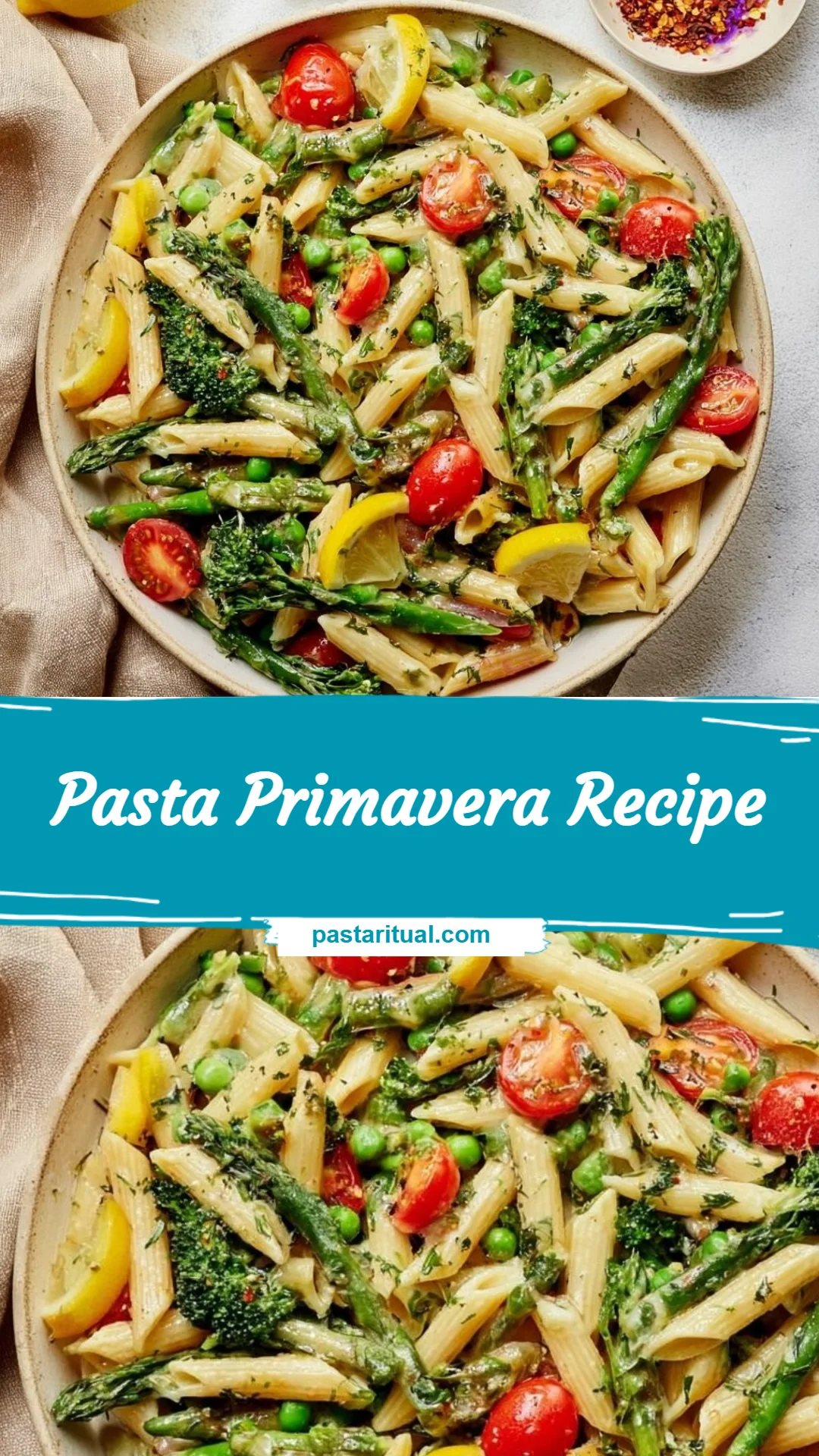
I hope you feel ready to make this Pasta Primavera Recipe tonight — it’s easier than it looks, endlessly customizable, and feels like a warm spring hug in a bowl. I love how forgiving it is: swap vegetables, lighten the cream, or fold in greens to suit your pantry and taste. If you want other takes on pasta-forward dinners, I often look to trusted recipe ideas like Love and Lemons’ Pasta Primavera Recipe for bright, vegetable-first inspiration, or the hearty, classic approach at RecipeTin Eats’ Pasta Primavera for variations and tips. Try it, make it your own, and come back to tell me how you adapted it — I love hearing kitchen stories.
FAQs About Pasta Primavera Recipe
Stored in an airtight container, the Pasta Primavera Recipe will keep well for about 3–4 days. The pasta can absorb sauce over time, so I recommend reheating gently with a splash of water or broth to loosen it, and stirring in a bit of fresh basil or a squeeze of lemon before serving to brighten the flavors.
Yes — you can cook the pasta and vegetables a few hours ahead. Keep the sauce separate and reheat everything together on low heat, adding a touch of broth or cream if the sauce seems thick. Finish with fresh basil and tomatoes right before serving to keep them vibrant.
Absolutely. The base recipe is vegetarian. If you want to keep it strictly vegetarian, use vegetable broth (as the recipe calls for) and avoid adding meat-based toppings. For a vegan version, substitute the cream with a plant-based cream alternative and use nutritional yeast in place of Parmesan.
Gently reheat in a skillet over low-medium heat with a splash of vegetable broth or water to help loosen the sauce; stir frequently. Microwaving works too — add a teaspoon of water and cover loosely to prevent drying. Fresh basil and a squeeze of lemon right before serving refresh the dish.
Yes — it’s a very flexible recipe. Swap in seasonal veggies like snap peas, green beans, roasted red peppers, or mushrooms. Just adjust cooking times: heartier vegetables may need a bit more sauté time, while delicate ones like spinach should be added at the end.
Pasta Primavera
Ingredients
Method
- Fill a large pot with water and bring it to a rolling boil. Salt the water well.
- Add penne and cook according to package directions, about 11 minutes for al dente.
- Drain well in a colander and return the pasta to the pot. Toss lightly to prevent sticking.
- Heat olive oil in a large skillet over medium-high heat.
- Add asparagus, yellow bell pepper, and broccoli florets. Sauté for 2–3 minutes.
- Add chopped zucchini and continue cooking for another 1–2 minutes.
- Reduce the skillet to medium heat and melt unsalted butter.
- Add minced shallot and garlic. Sauté for about 2 minutes.
- Stir in lemon zest and a dash of crushed red pepper flakes.
- Pour in vegetable broth and bring to a simmer.
- Once reduced, stir in heavy cream and lemon juice. Simmer gently for 1–2 minutes.
- Stir frozen peas into the hot pasta pot.
- Add cooked vegetables and pour the lemon cream sauce over.
- Stir until evenly coated and add shredded Parmesan and remaining lemon juice.
- Fold in halved grape tomatoes and chopped basil.
- Transfer to a serving bowl and garnish with Italian parsley, extra Parmesan, and crushed red pepper flakes.
- Serve warm.