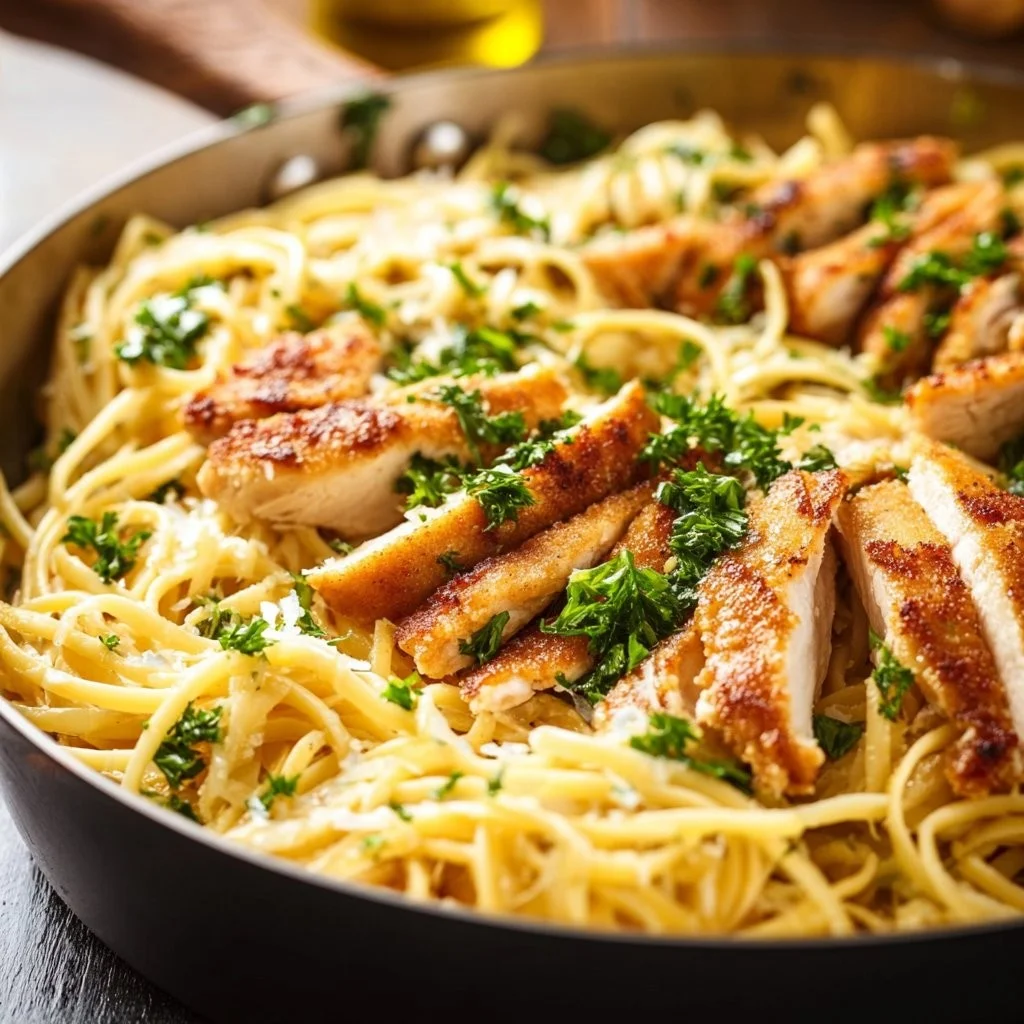
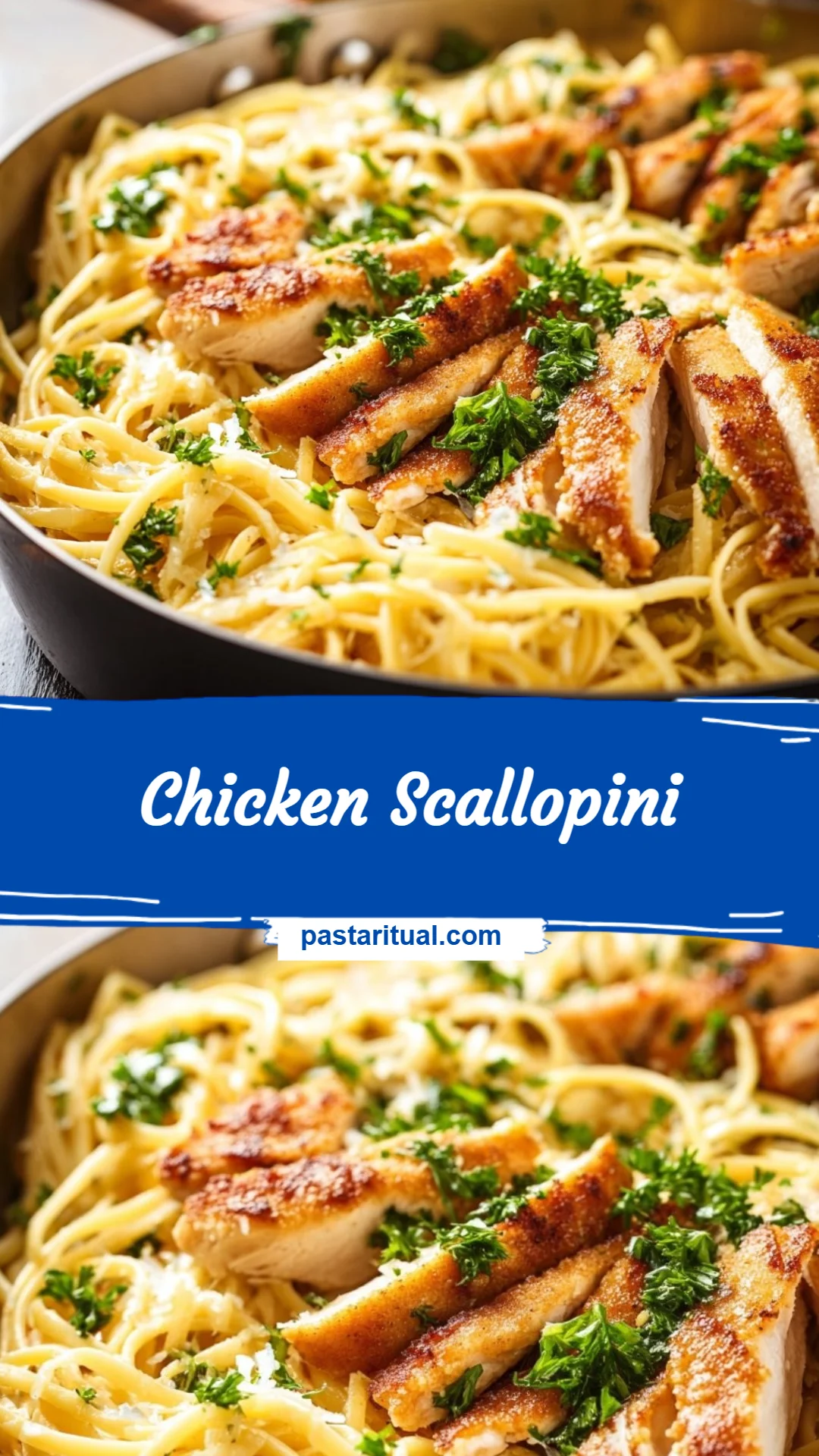
Chicken Scallopini
I still remember the first time I tried to make Chicken Scallopini — I wanted to impress a friend and ended up with a pan of chicken that looked like it had been through three weather seasons. If you’ve ever felt nervous about frying thin chicken or worried a creamy sauce will break, you’re not alone. This recipe is perfect for beginners: the steps are straightforward, forgiving, and I’ll walk you through the small tricks that make it stress-free. If you love comforting pasta dinners, you might also enjoy my take on chicken alfredo lasagna for another cozy, family-style meal.
A Quick Look at This Chicken Scallopini Recipe
Chicken Scallopini is a lean, protein-forward meal thanks to thin boneless, skinless chicken breasts that cook quickly and stay tender. The lemon in the sauce adds vitamin C and bright flavor while the dish balances carbohydrates from linguini with fats from butter and cream — so it can fit into a variety of eating styles if you adjust portion sizes. This recipe is naturally low in added sugars and can be made lighter by swapping a few ingredients; overall it works well for balanced weeknight dinners, meal prep for busy days, or when you want lighter comfort food without too much fuss.
Ingredients You’ll Need for Chicken Scallopini
Essentials
- 4 thin chicken breasts, skinless and boneless — about 1 to 1.25 pounds total. If yours are thick, pound them thin for even cooking.
- 1 tablespoon vegetable oil for sautéing (or olive oil for a slightly healthier fat profile)
- 2 tablespoons butter for sautéing the chicken
- 2 cups Italian seasoned breadcrumbs or Panko — these create the light, crunchy coating
- 1/4 teaspoon salt (adjust to taste)
- 1/4 teaspoon black pepper (freshly ground if possible)
- 1 lb linguini pasta, cooked according to package directions (reserve a cup of pasta water before draining)
- Fresh parsley for garnish (a tablespoon or two, chopped)
- 4 oz fresh lemon juice (about 2–3 lemons) — the acid brightens the whole dish
- 1/4 cup chicken broth — low-sodium if you’re watching salt
- 1/2 cup heavy whipping cream — gives the sauce a silky texture
- 1 cup butter (cold, cut into pieces) — added slowly to emulsify the sauce and make it glossy
Optional add-ons
- Grated Parmesan or Pecorino Romano to sprinkle at the end for umami and saltiness
- Zest of one lemon for extra citrus fragrance
- A light sprinkle of crushed red pepper flakes for heat
- Vegetables to toss with the pasta: baby spinach, roasted cherry tomatoes, or steamed asparagus are great choices
Substitutions and shortcuts
- Lighter dairy: Replace heavy cream with half-and-half or 1 cup milk plus 1 tablespoon cornstarch to thicken, for a lower-fat sauce.
- Dairy-free: Use a full-flavored unsweetened plant-based creamer or canned light coconut milk and use olive oil in place of butter (note: flavor will be different).
- Lower butter: Reduce the butter in the sauce by half and finish with a tablespoon of olive oil for glossiness.
- Breadcrumbs: Use gluten-free Panko or almond meal for a lower-carb, gluten-free coating.
- Pasta: Swap linguini for whole-grain or legume-based pasta for more fiber and nutrients.
- Make it ahead: Cook the chicken and keep it covered in the fridge; reheat gently over low heat or warm the sauce and toss with fresh pasta when ready to serve.
How to Make Chicken Scallopini Step-by-Step
I like to keep the process simple and focused on texture and temperature — those are the pieces that make a big difference without adding complexity.
Prep the chicken
- If your breasts are thicker than about 1/4 inch, place each between plastic wrap or in a zip bag and gently pound with a meat mallet or rolling pin to an even thickness. This helps them cook evenly and stay tender.
- Season the breasts lightly with the 1/4 teaspoon salt and 1/4 teaspoon pepper.
Set up a dredging station
- Pour the 2 cups of Italian seasoned breadcrumbs or Panko into a shallow dish. Press each chicken piece into the breadcrumbs so they’re evenly coated; a light press ensures crumbs stick but avoids a thick, heavy crust.
Cook the pasta
- Bring a big pot of salted water to a boil and cook the linguini according to package directions, aiming for al dente to preserve a bit of chew and prevent the dish from becoming gummy. Reserve about 1 cup of pasta water before draining — that starchy water is helpful if you need to loosen the sauce later.
Sauté the chicken
- In a large skillet, heat about 1 tablespoon of oil and 2 tablespoons butter over medium-high heat. Once the fat is shimmering and the butter foams, add the breaded chicken in a single layer without crowding.
- Sear until golden brown on the first side (about 2–3 minutes), then flip and cook another 2–3 minutes until cooked through. Because the breasts are thin, they’ll cook quickly — aim for an internal temperature of 165°F (74°C) if you use a thermometer, or cut into one to ensure no pink remains.
- Remove the chicken to a clean plate and tent with foil to keep warm.
Make the lemon butter sauce
- In a medium pan (or the same skillet wiped clean if you prefer to capture fond), add the 4 oz fresh lemon juice and 1/4 cup chicken broth. Bring to a quick boil over medium heat to reduce it slightly and concentrate flavor.
- Reduce heat to low-medium and stir in 1/2 cup heavy whipping cream. Let the mixture gently simmer until it begins to thicken — this usually takes a few minutes. Keep the heat moderate so the cream doesn’t scorch.
- Turn the heat very low. Add the 1 cup cold butter a few pieces at a time, whisking or stirring constantly until each addition is incorporated before adding more. This slow emulsification creates a glossy, stable sauce. If the sauce looks too thick, whisk in a little reserved pasta water to reach your desired consistency.
Finish the pasta and plate
- Add the cooked linguini directly into the lemon butter sauce and toss to coat. The hot pasta will absorb the sauce and create cohesion. Taste and adjust salt and pepper.
- Slice or keep the chicken whole and place it over the sauced pasta. Garnish with chopped parsley and a few grinds of black pepper. Serve immediately.
Nutrient-preserving notes: cook chicken to safe temperatures but avoid overcooking to keep protein juicy; simmer cream gently to maintain texture; and choose whole-grain or legume pasta if you want more fiber. If you’re preparing this ahead, keep the sauce and pasta separate and gently reheat the sauce before tossing with pasta to avoid separation.
Common Mistakes to Avoid
A few small missteps can shift this dish from glossy and delicious to dull or greasy. With a little attention to heat, timing, and technique, you’ll get consistently good results.
Mistake 1: Overcooking the chicken
Thin chicken breasts cook very quickly. If you leave them in the pan too long, they dry out and become tough. Watch the color and flip once the edges look set and the underside is golden; remove from the pan as soon as they’re cooked through.
Mistake 2: Adding butter too quickly
When making the sauce, adding large pieces of cold butter all at once or at high heat can cause the sauce to separate. Add butter slowly and keep the pan at low heat so it emulsifies into the cream and lemon base for a smooth, velvety finish.
Mistake 3: Crowding the pan
Trying to cook all the chicken at once can drop the pan’s temperature and steam the coating, making it soggy instead of crisp. Work in batches if needed so each piece gets that quick, hot sear that forms a light crust.
Serving Suggestions for Chicken Scallopini
This dish is naturally a comforting plate, but small additions make it feel fresh and balanced without compromising health-focused goals.
Light sides
Serve with a simple green salad dressed in lemon vinaigrette or a side of roasted Brussels sprouts tossed in a touch of olive oil and lemon zest to mirror the sauce flavors.
Vegetable boosts
Toss wilted spinach, steamed broccoli florets, or blanched asparagus with the pasta before adding chicken for added fiber, vitamins, and color. A handful of halved cherry tomatoes also provides freshness and acidity.
Meal prep and leftovers
For meal prep, store sauce and pasta separately from the chicken. Reheat sauce gently on low and toss with fresh pasta — this reduces the chance of the breadcrumb coating becoming soggy. Add a side of raw veggies or a microwaved bag of mixed greens for quick balanced meals during the week. If you want a cold option, sliced Chicken Scallopini also works over a bed of greens for a warm-chilled salad.
Conclusion
I hope this Chicken Scallopini recipe becomes one of your go-to weeknight wins — it supports a healthy lifestyle by offering lean protein, balanced macros, and bright citrus flavor that helps keep portions satisfying. It’s flexible, forgiving for beginners, and easy to adapt to lower-fat or gluten-free diets. If you’d like inspiration for other variations or historical context, I often look to resources like Culinary Hill’s Chicken Scallopini guide for technique notes and to Chef Billy Parisi’s Chicken Scallopini recipe for another perspective on flavor pairings. Give it a try tonight and let me know what twist you add — I love reading your tweaks and substitutions.
FAQs About Chicken Scallopini
Reheat the sauce and pasta gently on low heat, adding a splash of pasta water if needed; warm the chicken separately in a low oven (about 300°F/150°C) for 8–10 minutes or until heated through. This helps preserve the breadcrumb texture and keeps the chicken from overcooking during reheating.
Yes — boneless, skinless chicken thighs can be used. They’re more forgiving and stay juicy, but you may want to pound them slightly thinner for even cooking and adjust cooking time since thighs are often a bit thicker.
Absolutely. Store pasta and sauce separately from the cooked chicken to keep the coating crisp. Reheat gently and assemble when you’re ready to eat. Adding quick-steamed or raw veggies to the container keeps meals balanced.
Use half-and-half or milk with a slurry of cornstarch instead of heavy cream, reduce the butter by half, and use whole-grain pasta or a smaller portion of pasta paired with more vegetables to keep the meal satisfying and lighter.
You can freeze cooked chicken pieces, but the breadcrumb coating may lose crispness after thawing. If freezing, store sauce separately if possible and reheat sauce gently. For best texture, freeze components individually and assemble after reheating.
Chicken Scallopini
Ingredients
Method
- Pound chicken breasts to 1/4 inch thickness if thicker for even cooking, then season lightly with salt and pepper.
- Set up a dredging station with breadcrumbs in a shallow dish and press each chicken piece into the breadcrumbs until evenly coated.
- Cook linguini according to package directions and reserve 1 cup of pasta water before draining.
- In a large skillet, heat oil and butter over medium-high heat. Add chicken in a single layer without crowding and sear until golden brown, about 2-3 minutes per side.
- Remove the chicken and tent with foil to keep warm.
- In a medium pan, add lemon juice and chicken broth, and bring to a boil to reduce slightly.
- Reduce heat to low-medium, stir in cream and let simmer until thickening.
- Turn heat very low and whisk in cold butter, a few pieces at a time, until fully incorporated.
- Add cooked linguini to the sauce and toss to coat. Adjust seasoning if needed.
- Plate with chicken on top and garnish with parsley.