Vegan Pesto Pasta with Roasted Vegetables (Oil-Free!)
Have you ever come home hungry, opened the fridge, and instantly craved a bowl of something green, comforting, and easy to toss together? I have—more times than I can count—and that exact little craving is how this recipe was born: cozy, a little rustic, and surprisingly simple. If you’re new to oil-free cooking or nervous about making pesto without olive oil, don’t worry—I felt the same hesitation the first time I used aquafaba as the binder. I even kept a note from a failed pesto attempt in my phone until I figured out the right nut-to-basil ratio. If you like flavor-forward weeknight dinners, you might also enjoy a lighter pasta idea I sometimes pair with this one: Caprese pesto pasta salad.
A Quick Look at This Vegan Pesto Pasta with Roasted Vegetables (Oil-Free!) Recipe
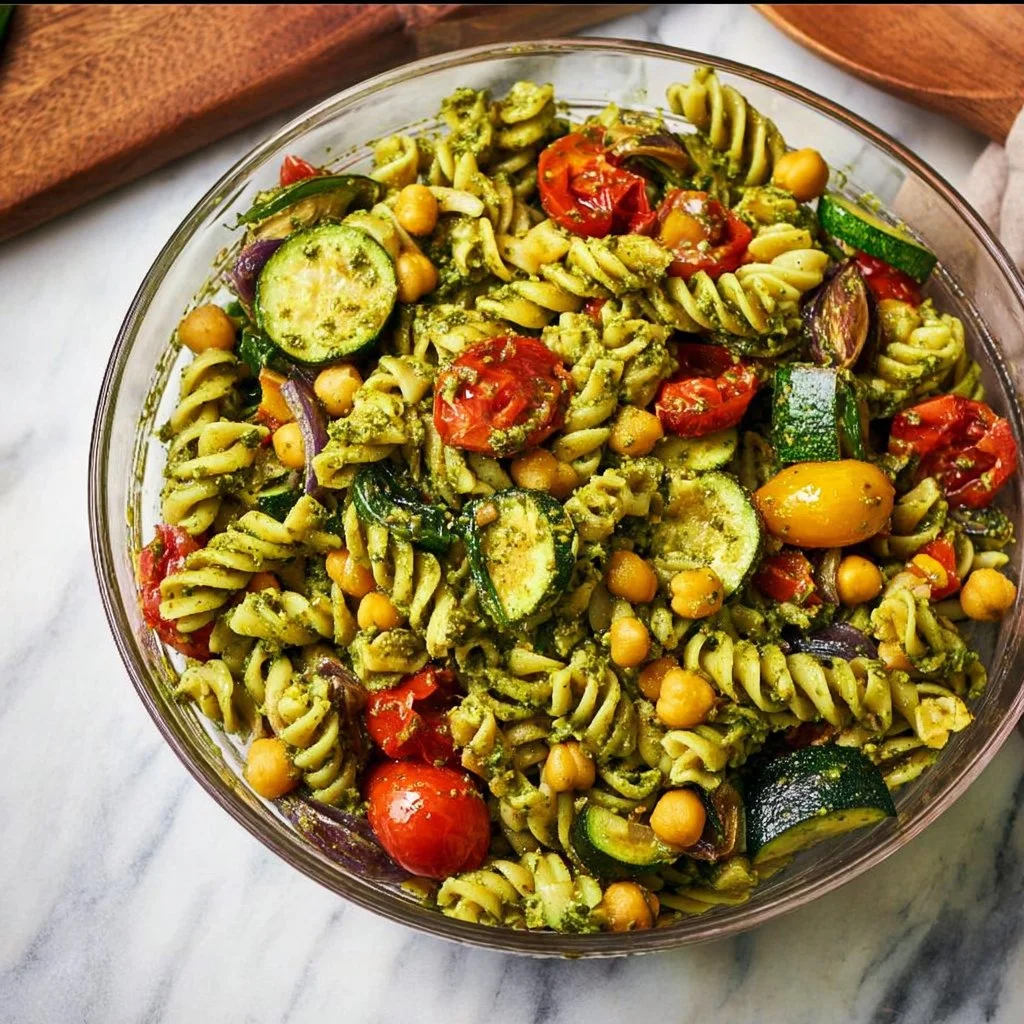
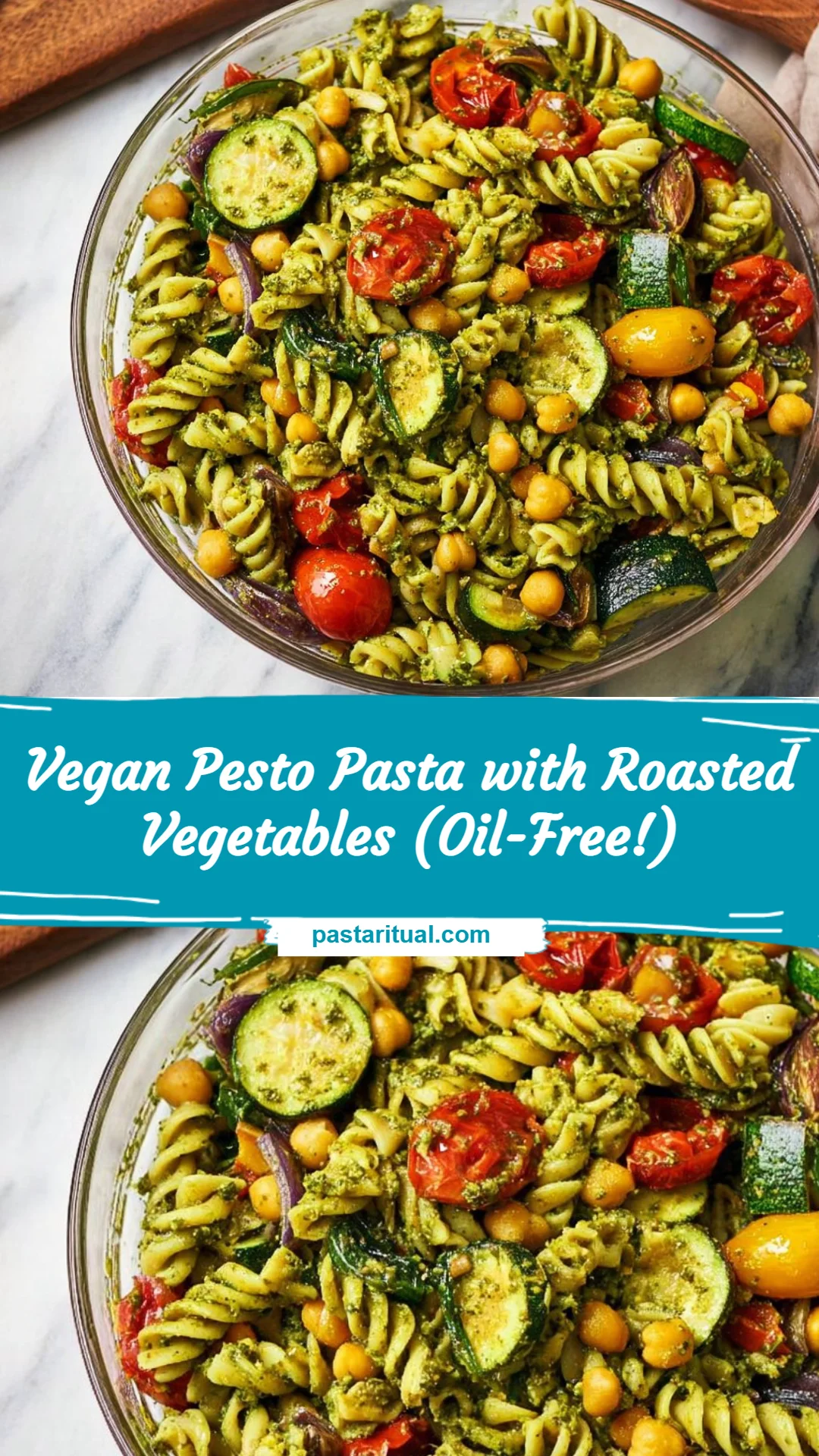
This Vegan Pesto Pasta with Roasted Vegetables (Oil-Free!) is a balanced, veggie-forward meal that delivers plant protein, fiber, and a wealth of vitamins and minerals from fresh basil, chickpeas, and colorful vegetables. The canned chickpeas contribute protein and fiber, helping the dish feel satisfying, while zucchini, summer squash, and tomatoes add vitamin C and potassium. This recipe is naturally wholesome and low in added sugar, and it works beautifully for meal prep or a lighter comfort-food dinner when you want something nourishing without fuss.
Ingredients You’ll Need for Vegan Pesto Pasta with Roasted Vegetables (Oil-Free!)
Essentials
- 16 oz (500 g) dry pasta (fusilli, penne, or bow tie) — choose whole-grain for extra fiber if you like
- 1 cup oil-free vegan pesto (see notes below on how I make mine)
- 15 oz (400 g) can of chickpeas, drained and rinsed
- 1 medium zucchini (courgette), chopped into bite-sized pieces
- 1 medium summer squash, chopped into bite-sized pieces
- 1 medium red onion, sliced into wedges or thick crescent slices
- 2 cups cherry or date tomatoes, halved
- 4 cloves garlic, minced (for roasting and pesto; I split the garlic between the two)
- Fresh cracked black pepper, to taste
- 1 tbsp garlic powder (for seasoning the roast)
- 1 tsp fine sea salt (or to taste)
Notes on the oil-free vegan pesto essential: I make a bright, creamy pesto using aquafaba (the liquid from the chickpea can), packed basil leaves, garlic, nuts (pine nuts or walnuts), nutritional yeast for savory depth, lemon juice for brightness, and a splash of water to reach creamy texture. This keeps the pesto oil-free while still silky.
Optional add-ons
- Lemon zest or a squeeze of lemon juice for brightness when serving
- A handful of baby spinach or arugula stirred in at the end for extra greens
- Toasted (dry) pine nuts or sunflower seeds for crunchy topping — dry-toast in a skillet without oil
- Red pepper flakes for heat
- Vegan parmesan or a sprinkle of nutritional yeast if you like more umami
- Olives or capers for a briny punch
Substitutions and shortcuts
- Pasta: Swap fusilli/penne/bow tie for whole-grain, gluten-free pasta, or chickpea pasta for extra protein. Adjust cook time per package.
- Chickpeas: Use freshly cooked chickpeas if you prefer; save the aquafaba from your own batch for the pesto.
- Nuts in pesto: Substitute walnuts, almonds, or sunflower seeds (for nut-free) instead of pine nuts.
- Basil: If basil is scarce, try a mix of basil and baby spinach or parsley, though basil-forward will be most classic.
- Pesto shortcut: If short on time, use 1 cup of store-bought oil-free pesto or a low-oil version. If you only have regular pesto, you can still use it sparingly and balance with lemon juice.
- Roasting shortcut: Use pre-chopped frozen mixed vegetables if fresh veg are unavailable—toss them on a baking sheet and roast until they brown a little.
- Make-ahead: Roast the vegetables and prepare the pesto a day ahead; assemble just before serving.
How to Make Vegan Pesto Pasta with Roasted Vegetables (Oil-Free!) Step-by-Step
I like to keep cooking approachable—small techniques make the biggest difference. Below I walk through each stage so you can get a vibrant plate without stress.
Preheat and prep
- Preheat your oven to 425°F (220°C). High heat helps the vegetables brown quickly without turning to mush, which keeps texture and preserves nutrients. Line a large rimmed baking sheet with parchment or a silicone mat for easy cleanup.
Drain and rinse chickpeas
- Open the 15 oz (400 g) can of chickpeas. Drain them into a sieve and rinse under cold running water until the water runs clear. Rinsing reduces excess sodium and removes the canning liquid’s metallic taste. Reserve the aquafaba (the drained liquid) in a small bowl if you plan to use it immediately for pesto; otherwise, chill it briefly.
Chop vegetables and mince garlic
- Chop the zucchini and summer squash into roughly 1-inch pieces so they roast evenly. Slice the red onion into wedges thick enough that they don’t burn, and halve the cherry tomatoes. Mince two of the garlic cloves to scatter among the veggies for roasting; you’ll use the other garlic in the pesto.
Season and roast the vegetables
- Spread the zucchini, summer squash, onion, tomatoes, and the rinsed chickpeas across the baking sheet in a single layer. Sprinkle with garlic powder, sea salt, fresh cracked black pepper, and the minced garlic. Roast in the preheated oven for about 20–25 minutes, shaking the pan once halfway through. Roast until the edges are caramelized and browned in places—this adds depth of flavor without oil. Keep an eye on the tomatoes; they should soften and blister, not collapse.
Cook the pasta
- While the vegetables roast, bring a large pot of salted water to a rolling boil. Add the pasta and cook according to package instructions until al dente—typically 8–12 minutes depending on shape and brand. Al dente pasta holds up to mixing and won’t get mushy when combined with the warm roasted vegetables.
Prepare oil-free pesto using aquafaba
- If you’re making pesto from scratch: In a blender or food processor, combine about 2 cups packed basil leaves, 1–2 cloves garlic (or adjust to taste), 1/3–1/2 cup nuts (pine nuts, walnuts, or sunflower seeds), 2 tbsp nutritional yeast, the reserved aquafaba (start with 2 tbsp), 1–2 tbsp lemon juice, and a pinch of salt. Pulse until combined and then blend while adding a little water or more aquafaba as needed to reach a creamy consistency—about the texture of traditional pesto but a little lighter. Taste and adjust lemon, salt, or garlic. If you’d like a silkier texture, scrape down the sides and blend a bit longer.
Drain and rinse pasta (if making a pasta salad)
- Drain the pasta well and, if you’re making this as a cooler pasta salad or want to stop the cooking immediately, rinse briefly under cool water. Rinsing removes excess starch and helps the pasta cool down faster. If you prefer to serve warm, I’ll often skip a full rinse and instead hold back a cup of pasta water to loosen the pesto if needed.
Combine and mix
- In a large bowl, combine the roasted vegetables, drained pasta, chickpeas, and the oil-free pesto. Toss gently but thoroughly. If the pesto seems thick, add a tablespoon of reserved pasta water or a splash of water to reach a saucy but not watery coating. Taste and adjust seasoning—sometimes a bit more salt, pepper, or lemon brightens the whole dish.
Serve warm or store for later
- Serve immediately while warm, or let it cool and store in an airtight container in the refrigerator for up to 3–4 days. If chilled, let the pasta come to room temperature or give it a gentle warm-through in a skillet—add a splash of water or lemon juice to refresh the pesto coating.
Tips to preserve nutrients and flavor:
- Roast at high heat for a shorter time to reduce nutrient loss and concentrate flavor through caramelization.
- Avoid overboiling pasta; al dente texture preserves more of the starch structure and keeps the dish satisfying.
- Use fresh basil and bright lemon juice—fresh ingredients make the oil-free pesto sing.
Common Mistakes to Avoid
When I first made oil-free pesto pasta, I made a few mistakes that are easy to avoid. Here are the three biggest ones and how I fixed them.
Mistake 1: Overcooking the vegetables
Leaving veggies in the oven too long makes them soft and dulls their flavor. Roasting at 425°F (220°C) for roughly 20–25 minutes gives you caramelized edges while keeping the interior tender. Check after 15 minutes and stir or shake the pan to encourage even browning.
Mistake 2: Making pesto too watery or too dry
Using too much aquafaba or too little will ruin the pesto texture. Start with 1–2 tablespoons of aquafaba and add gradually while blending. If it’s too thick, add a teaspoon of water at a time. If it’s too thin, add more nuts or basil to thicken.
Mistake 3: Not seasoning in layers
Many home cooks under-salt when they think the pesto will carry all the flavor. Season the roasted vegetables lightly, salt the pasta water, and taste the combined dish before serving. A little salt at each stage makes a big difference.
Serving Suggestions for Vegan Pesto Pasta with Roasted Vegetables (Oil-Free!)
This recipe is flexible—serve it warm, room temperature, or slightly chilled. It’s equally great as a main or a hearty side.
Light and bright bowl
Serve a generous portion topped with fresh lemon zest and a handful of baby arugula for peppery contrast. The lemon wakes up the basil and the arugula adds freshness and texture.
Picnic or packed lunch
This pasta holds up well in a lunchbox. Pack a small container of extra pesto or lemon wedges so the pasta doesn’t dry out. A sprinkle of toasted seeds just before eating adds crunch.
Cozy family dinner
Serve warm with a side of crusty whole-grain bread and a simple green salad. If you want a hint of richness, add a few spoonfuls of dairy-free yogurt mixed with lemon and herbs on the side—great for kids and comforting on cool evenings.
Conclusion
I love how this Vegan Pesto Pasta with Roasted Vegetables (Oil-Free!) brings together bright basil, hearty chickpeas, and caramelized vegetables into a meal that’s satisfying without feeling heavy. It fits easily into a balanced week of meals—great for batch cooking, flexible for swaps, and forgiving if you like to cook by feel. If you want more inspiration for oil-free pesto pasta variations and a similar salad-style version, check out this Vegan Pesto Pasta Salad with Roasted Veggies (Oil-Free!) on No Sweat Vegan for extra ideas and inspiration.
FAQs About Vegan Pesto Pasta with Roasted Vegetables (Oil-Free!)
Use chickpea-based pasta or add extra canned chickpeas or white beans. You can also top bowls with toasted, dry-roasted hemp seeds or a scattering of edamame for a protein punch.
Absolutely. Swap nuts in the pesto for toasted sunflower seeds, hemp seeds, or extra nutritional yeast. The pesto will be just as tasty and allergy-friendly.
Yes, you can; just look for an oil-free or low-oil variety to stay true to the recipe’s intent. If the store-bought pesto is oilier than you like, use a little less and add lemon juice or a splash of aquafaba or water to loosen it.
Stored in an airtight container, it lasts about 3–4 days in the refrigerator. I recommend adding any delicate toppings (like toasted seeds or fresh herbs) just before serving to keep them fresh.
I don’t usually recommend freezing this dish because the texture of roasted vegetables and pesto can change after thawing. If you must freeze, do so without the pesto and add freshly made or defrosted pesto when reheating.
Vegan Pesto Pasta with Roasted Vegetables
Ingredients
Method
- Preheat your oven to 425°F (220°C). Line a large rimmed baking sheet with parchment or a silicone mat.
- Open the can of chickpeas, drain, and rinse under cold running water until clear.
- Chop zucchini and summer squash into roughly 1-inch pieces. Slice red onion into thick wedges, and halve the cherry tomatoes. Mince two garlic cloves for roasting.
- Spread zucchini, summer squash, onion, tomatoes, and chickpeas on the baking sheet. Sprinkle with garlic powder, sea salt, and black pepper. Roast for 20-25 minutes, shaking the pan halfway through.
- Bring a large pot of salted water to a boil. Add pasta and cook until al dente according to package instructions.
- In a blender or food processor, combine basil leaves, garlic, nuts, nutritional yeast, reserved aquafaba, lemon juice, and salt. Blend until creamy, adjusting texture as needed.
- In a large bowl, combine roasted vegetables, drained pasta, chickpeas, and pesto. Toss to mix thoroughly and adjust seasoning.
- Serve immediately or store in the refrigerator for up to 3-4 days. Warm through before serving if chilled.